
The Sequencing Batch Reactor (SBR), also known as the sequential batch reactor, has been a proven wastewater treatment process for decades. Many industries still rely on it as the backbone of their Effluent Treatment Plants and Sewage Treatment Plants.
But with newer technologies like MBBR systems gaining popularity, engineers often ask: Is SBR still relevant today?
The short answer is yes, but with some caveats. Let’s break down the process, advantages, and how it stacks up against alternatives.
What is the SBR Process?
The SBR process is a cyclic activated sludge system that treats wastewater in batches rather than a continuous flow. One tank performs multiple functions in sequence: filling, aeration, settling, and decanting.
Typical SBR cycle steps:
- Fill – Wastewater enters the tank.
- React – Aeration begins to promote microbial degradation of organics.
- Settle – Aeration stops, solids settle to the bottom.
- Decant – Clear supernatant water is discharged.
- Idle – A brief pause before the next cycle starts.
This simple but effective process makes the SBR particularly attractive for small to medium-sized industries.
Comparing SBR vs. MBBR
With MBBR technology on the rise, many operators compare the two directly. Here’s a side-by-side breakdown:
1. Process Flow and Flexibility
- SBR
- Operates in batches within a single tank
- Works best with steady, predictable flows
- Limited ability to handle shock loads
- Operates in batches within a single tank
- MBBR
- Operates on continuous flow
- Uses free-floating biofilm carriers in an aeration tank
- Handles variable flows and shock loads more effectively
- Operates on continuous flow
2. Footprint and Civil Work
- SBR
- Needs fewer tanks but larger volumes per batch
- More complex automation for sequencing cycles
- Needs fewer tanks but larger volumes per batch
- MBBR
- Compact and modular footprint
- Easier to scale up as industrial load increases
- Compact and modular footprint
3. Operation and Maintenance
- SBR
- Requires precise cycle timing
- Settling can be disrupted by sudden load changes
- Sludge management requires operator attention
- Requires precise cycle timing
- MBBR
- Biofilm process eliminates settling issues in the aeration tank
- Lower operator dependency
- Resilient under fluctuating load conditions
- Biofilm process eliminates settling issues in the aeration tank
Advantages of SBR Systems
Despite the popularity of newer designs, SBR systems still have important advantages:
- Lower Capital Cost – Especially suitable for smaller industries where land is available.
- Simplified Layout – A single tank performs multiple functions.
- Good Effluent Quality – Capable of meeting stringent discharge standards when designed well.
- Flexibility – Cycle times can be adjusted to manage different influent characteristics.
In fact, many containerised sewage treatment plants still use it because it allows easy installation and mobility for decentralized applications.
The Central Pollution Control Board of India identifies sequencing batch reactors as one of the approved technologies for sewage and industrial wastewater treatment in compliance with national discharge norms.
Where SBR Falls Short
SBR’s cyclic nature can become a limitation in some industrial setups:
- Not ideal for highly variable flows
- Larger footprint compared to MBBR
- Automation complexity increases O&M burden
- Settling stage is sensitive to influent shock loads
This is why many large-scale industries are moving toward MBBR or hybrid solutions, sometimes in combination with a DAF system to handle fats, oils, and grease before biological treatment.
Industry Applications
- Food and Beverages – Moderate organic loads with predictable flows are well-suited for SBR.
- Pharmaceuticals – SBR can achieve good COD and BOD reduction, though MBBR may offer more resilience.
- Textiles – Effective for consistent dyeing wastewater streams, though high load variation can challenge performance.
- Municipal Sewage – Widely used in decentralized and containerised sewage treatment plants.
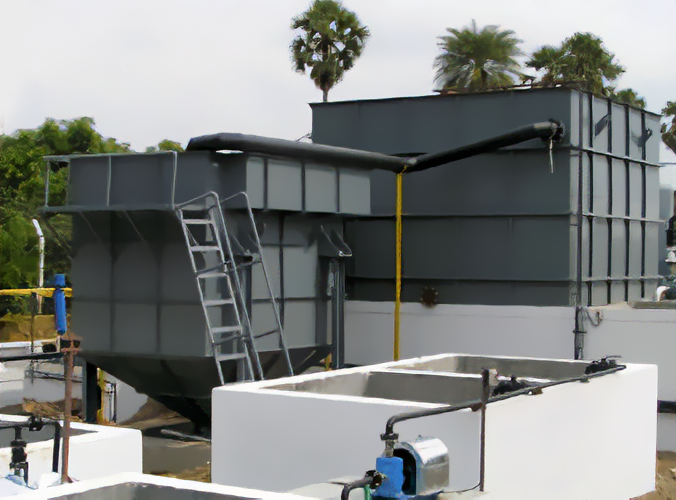
Ecovive’s Approach
At Ecovive, we do not recommend a “one-size-fits-all” solution. Instead, we assess:
- Flow variability
- Available land footprint
- Target effluent standards
- O&M capability of the client
If steady flows and space are available, SBR can still deliver reliable results at lower cost. For industries facing fluctuating loads and limited space, MBBR is often the better choice.
Our team also integrates SBR and MBBR with pre-treatment units such as DAF systems and polishing units to ensure compliance with the latest environmental regulations.
Conclusion: Is SBR Still Worth It?
Yes, SBR systems remain relevant in today’s industrial wastewater treatment landscape. They are effective, proven, and cost-efficient where flows are steady and space is available. However, with growing industrial variability and space constraints, MBBR technology often provides more flexibility.
At Ecovive, we guide clients based on real-world constraints, not theory or bias. Whether it’s SBR, MBBR, or hybrid systems, our goal is performance that truly fits your plant.
👉 Explore our Products & Services | See Industries We Serve
