
Freshwater is no longer guaranteed, especially for industries. From chemical factories in Gujarat to textile hubs in Tamil Nadu, water quality and supply are hitting critical lows. TDS levels are rising, municipal supply is inconsistent, and borewells are running dry.
If you’re still depending on raw groundwater or tankers, it’s time to look at desalination plants as a serious, long-term solution.
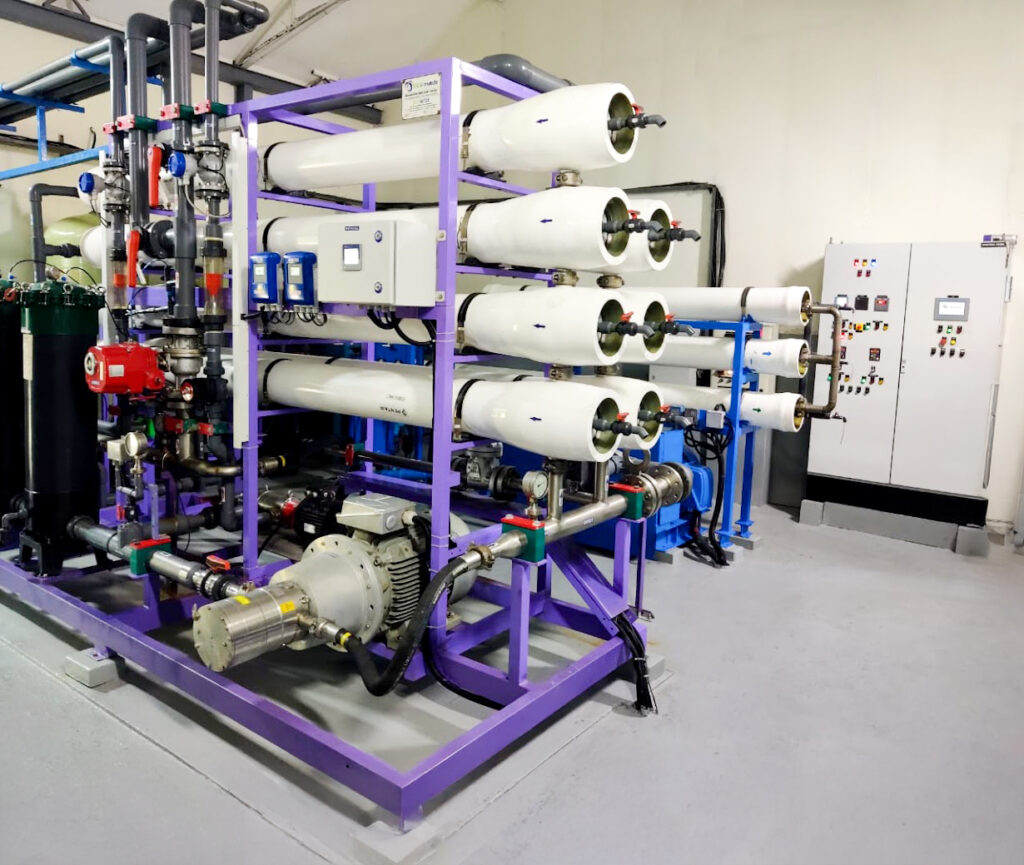
Why Industrial Desalination Matters Right Now
Across India’s industrial clusters, groundwater TDS levels above 2500 mg/L are becoming the norm. Salinity intrusion on the coasts and overuse inland means higher treatment costs and unreliable performance from conventional RO systems.
With rising membrane fouling, higher rejection rates, and falling recovery, RO alone can’t cut it.
Desalination plants are built to treat high-TDS water efficiently, especially in industrial environments where volume and reliability matter.
What Desalination Plants Do Differently
Unlike standard filtration or softeners, desalination uses processes like Brackish Water Reverse Osmosis (BWRO) and Seawater Reverse Osmosis (SWRO) to handle tough water quality.
When paired with proper pre-treatment and design, desalination systems can achieve:
- 75–85% water recovery
- Stable output quality for industrial processes
- Longer equipment lifespan with lower Opex
→ Learn how our Effluent Treatment Plants integrate desalination
Desalination Isn’t Just for Coastal Areas, but Coastal Plants Have a Big Advantage
Here’s how a typical system works:
Industries near the coastline can tap into seawater using compact, high-efficiency SWRO systems. These setups are already used by ports, ship desalination plants, and offshore facilities.
- DAF or UF pre-treatment to remove solids and organics
- Energy-efficient SWRO units with recovery devices
- Post-treatment for specific industrial needs
If ships can run on desalinated water, your factory can too.
→ See how our Water Treatment Plants support coastal operations
Learn how desalination is shaping the future of coastal water security here
Combine Desalination With Reuse for Long-Term Water Resilience
Desalination becomes even more powerful when paired with treated wastewater reuse. This reduces your fresh water dependency and improves Zero Liquid Discharge (ZLD) efficiency.
Together, they help:
- Lower tanker and municipal costs
- Meet environmental norms
- Achieve circular water strategies
→ Read about our Zero Liquid Discharge Systems
What Ecovive Offers Beyond Just Hardware
We’ve helped industries from pharma to food processing adopt desalination systems that are cost-effective and sustainable. Our systems often include:
- Hybrid SWRO + BWRO configurations
- Automation and monitoring systems
- Energy-saving recovery tech
- Custom pre-treatment using stripper column setups or activated carbon
Whether you’re running a coastal plant, a boat desalination plant, or an inland factory, we design systems that match your source water and operational needs.
→ Looking to upgrade? Contact us
Final Word: Desalination Plants Aren’t Just Backup. They’re the Future.
Desalination isn’t overkill. It’s insurance for any industry that relies on clean, stable water. As quality and availability decline, you need more than just a workaround.
Investing in a desalination plant today means water security for tomorrow.
