
When people think of wastewater treatment, they picture aeration tanks, membranes, or filters. But here’s the truth: without clarifiers, most of those units wouldn’t even work. Clarifiers might look like simple tanks, yet they decide whether an effluent treatment plant runs smoothly or constantly struggles with solids overload.
So let’s talk about what clarifiers actually do, the main types used in industries, and how to know which one is right for your plant.
Why Clarifiers Are More Than Just Settling Tanks
Clarifiers are the first line of defense in an effluent treatment plant (ETP). Their job is to remove suspended solids before water enters biological or advanced treatment units. When they’re designed right, they:
- Protect downstream units like aeration tanks, membranes, and filters
- Reduce operating costs by lowering sludge and chemical loads
- Keep industries compliant with strict discharge norms
- Improve the chances of water reuse for cooling, cleaning, or production
- Support zero liquid discharge (ZLD) by boosting overall system efficiency
Think of clarifiers as guardians of the treatment chain. If solids slip through here, the whole plant pays the price, higher costs, more downtime, and a bigger risk of non-compliance.
The Three Most Common Types of Clarifiers
Solids Contact Clarifier
This design combines flocculation, mixing, and settling in one unit. It’s effective for large, stable flows and industries where influent solids are predictable. You’ll often see it in steel, pharma, and textile facilities.
- Strengths: Efficient, high removal rates
- Limitations: Higher civil cost, needs skilled operators
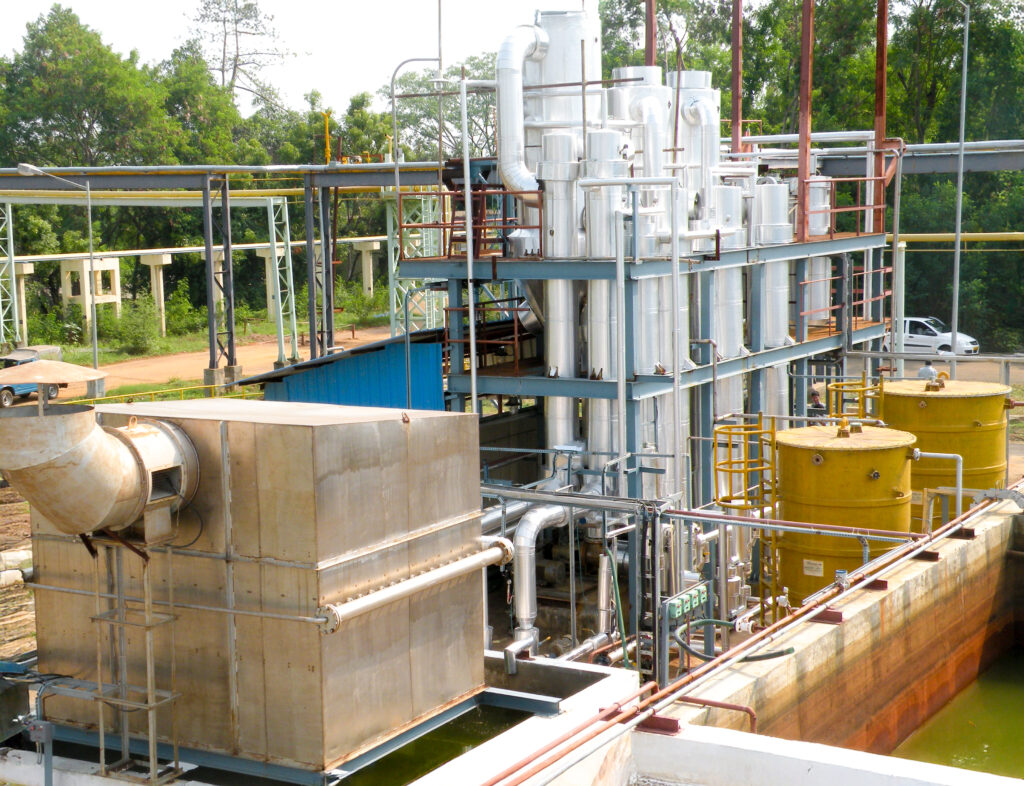
Tube Settler (Lamella Clarifier)
When space is tight, tube settlers step in. With inclined plates that maximize settling area, they fit into compact sites while still handling moderate loads. That’s why food and beverage plants often rely on them.
- Strengths: Compact, cost-effective, quick installation
- Limitations: Less effective with high or fluctuating solids
High Rate Solid Contact Clarifier (HRSCC)
HRSCCs are built for speed and variability. They can handle shock loads, settle faster, and keep operations steady under inconsistent influent. Cement plants, dyeing units, and power stations are good fits.
- Strengths: Great for fluctuating loads, faster performance
- Limitations: Higher energy use, sensitive to dosing or operator error
Choosing the Right Clarifier
Every clarifier type has its place. Here’s a quick guide:
- Limited land? Go with a tube settler.
- Variable or high-load influent? HRSCC is the safer bet.
- Large, stable flow? Solids contact clarifier usually wins.
It’s not about what’s popular, it’s about what matches your site’s influent profile, manpower, and compliance needs. Even the Central Pollution Control Board of India lists clarifiers as essential units in both sewage and industrial treatment guidelines.
Why Clarifiers Are a Strategic Choice
At first glance, clarifiers may seem like a background component in wastewater treatment. But look closer, and they’re actually a strategic asset:
- They protect expensive downstream units from overloading.
- They make compliance easier and safer.
- They support industries in cutting water use and strengthening sustainability.
From textile dyeing to food processing, from cement to pharmaceuticals, clarifiers continue to be the quiet workhorses that keep ETPs efficient.
Ecovive’s Perspective
At Ecovive, we don’t believe in off-the-shelf solutions. We design clarifiers after analyzing:
- Influent TSS levels and variability
- Flow behavior and site-specific load patterns
- Operator skills and manpower availability
- Long-term reuse or ZLD targets
By treating clarifiers as more than just tanks, we help clients build systems that are compliant today and sustainable tomorrow.
👉 Explore our Products & Services | See Industries We Serve
