
Freshwater scarcity is one of the biggest challenges of our century. With rising populations, climate change, and increased industrial activity, coastal regions are under immense stress. Cities and industries near the sea face an urgent question: how do we turn the abundant seawater around us into usable freshwater? The answer lies in desalination plants.
What are Desalination Plants?
A desalination plant converts seawater or brackish water into freshwater by removing salts and impurities. The most common technologies include reverse osmosis and thermal processes such as multi-stage flash distillation. Today, desalination is no longer limited to large municipal projects, it is also being deployed on a smaller scale for industries, communities, and even vessels through boat desalination plants and ship desalination plants.
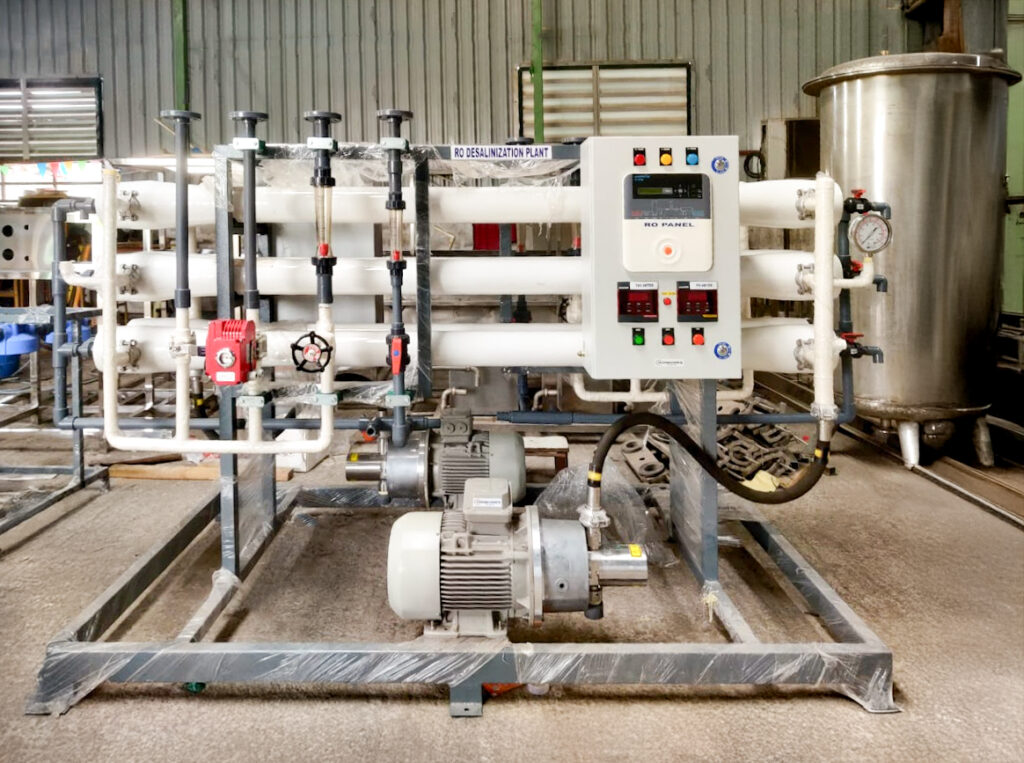
Why Coastal Regions Need Desalination
Coastal areas are expanding rapidly, but freshwater supplies are shrinking. Over-extraction of groundwater has led to saltwater intrusion in many regions, making traditional sources unreliable. Desalination plants provide a stable and scalable solution:
- Continuous access to freshwater, independent of rainfall or river systems
- Protection against groundwater depletion
- Improved resilience during droughts
For industries that cannot afford disruptions, such as refineries and petrochemical plants or power stations, desalination offers a dependable safeguard.
For technical insights into desalination plant technologies, see Industrial Desalination Plants: Technology for Freshwater Recovery
Industrial Applications of Desalination
Industries located in coastal zones often need massive volumes of processed water. Traditional freshwater sources may not meet these needs. Desalination plants can supply high-quality water for:
- Power generation and cooling systems
- Oil refineries and petrochemical processes
- Food and beverage industries
- Municipal supply in coastal towns
Some advanced setups integrate with stripper columns and other treatment stages to handle specific industrial contaminants.
Boat and Ship Desalination Plants
Beyond industries and cities, desalination is becoming critical for marine applications. Boat desalination plants and ship desalination plants allow vessels to operate independently at sea without relying on port water supplies. These compact RO-based systems ensure crews always have access to safe drinking water, even during long voyages.
Desalination and Sustainability
One concern often raised about desalination is its energy demand. However, advances in reverse osmosis membranes and renewable energy integration are driving costs down and improving sustainability. Solar- and wind-powered desalination units are now being tested successfully in many parts of the world.
Moreover, by reusing brine and recovering energy from high-pressure reject streams, modern plants reduce their environmental footprint. In coastal cities where freshwater alternatives are limited, desalination is often the most sustainable long-term option.
The Future of Desalination Plants
The role of desalination plants will only grow in the coming decades. Here’s what the future looks like:
- Decentralized Plants: Smaller, modular plants for industries and coastal towns.
- Hybrid Systems: Integration with wastewater reuse and zero liquid discharge to minimize waste.
- Renewable-Powered Desalination: Using solar, wind, or tidal energy for reduced carbon footprint.
- Smart Operations: AI-driven monitoring to optimize efficiency and predict maintenance.
By combining innovation with necessity, desalination will become the backbone of water security in coastal regions.
Conclusion
As water scarcity intensifies, industries and communities must rethink their sources. Desalination plants provide a reliable, scalable, and increasingly sustainable way to transform seawater into life-sustaining freshwater. From large-scale plants serving entire cities to compact boat desalination plants and ship desalination plants, the technology is adapting to every need.
At Ecovive, we design desalination systems tailored for both industrial and municipal applications, ensuring resilience for coastal regions.
The future of desalination is not just about technology, it’s about survival, sustainability, and securing water for the generations to come.
