
Water is one of the most critical resources for modern industry. From electricity production to the clothes we wear, reliable water quality shapes performance, cost, and sustainability. Yet, industries face rising challenges: fresh water is becoming scarce, and regulatory authorities are tightening discharge norms. This is where the reverse osmosis plant proves its value.
A reverse osmosis (RO) system is not just another filtration setup. It is a proven, scalable technology that removes salts, dissolved minerals, and impurities to deliver consistent water quality. For industries such as power generation and textiles—both highly water-dependent—RO plants have become essential tools for survival and growth.
What is a Reverse Osmosis Plant?
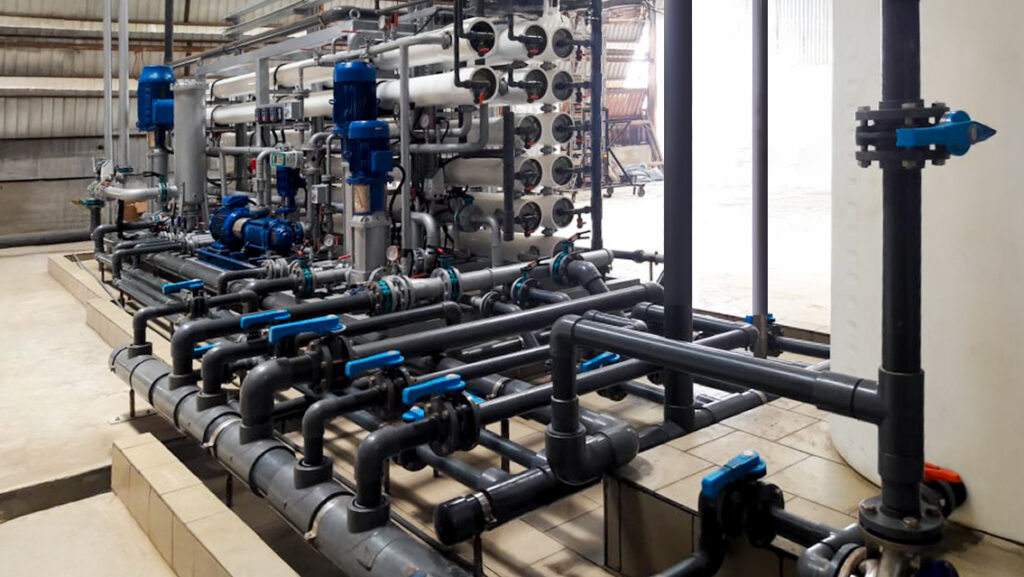
A reverse osmosis plant works on a simple but powerful principle. Water is forced through semi-permeable membranes under high pressure. These membranes allow water molecules to pass while rejecting contaminants like salts, heavy metals, and dissolved solids. The result is purified water with very low conductivity and total dissolved solids (TDS).
RO plants are rarely used in isolation. They are often combined with ultra filtration plants to remove suspended particles before the water reaches the RO membranes. They also complement water softening systems, reducing hardness that can damage boilers and machinery. In many cases, they form the backbone of zero liquid discharge systems, ensuring that industries recycle and reuse their water with minimal waste.
This combination of reliability and adaptability makes reverse osmosis plants one of the most versatile tools in industrial water treatment.
Why Power Plants Rely on RO
Electricity generation is an energy-intensive process that depends on clean, high-quality water. Boilers and cooling towers, the beating heart of any power station, are extremely sensitive to impurities. Even small amounts of dissolved salts or silica can cause scale formation, corrosion, or efficiency loss.
A reverse osmosis plant addresses these challenges head-on. By providing demineralized water, RO systems:
- Protect boilers from scaling and corrosion
- Reduce chemical dosing in pre-treatment systems
- Improve overall energy efficiency
- Extend equipment life, lowering operational costs
For plants that must comply with environmental discharge norms, RO adds another layer of assurance. The treated water meets strict quality standards, reducing risks of penalties or shutdowns.
If you’d like to see how Ecovive supports this sector, check our power plant industry solutions.
Why the Textile Industry Depends on RO
Few industries are as water-intensive as textiles. From dyeing fabrics to finishing treatments, water quality directly affects product consistency and environmental compliance. Unfortunately, textile wastewater is highly challenging—it often contains dyes, salts, chemicals, and organic compounds.
Installing a reverse osmosis plant provides textile units with three clear advantages:
- Water Reuse: RO-treated water can be recycled back into dyeing and finishing processes, cutting down freshwater intake.
- Compliance: With regulatory authorities pushing for zero discharge, RO plants help textile units meet norms.
- Cost Efficiency: Recycling water reduces both procurement and disposal costs.
For a practical view of our projects, explore our textile industry solutions.
Integration with Zero Liquid Discharge Systems
In recent years, industries across India have seen a shift toward zero liquid discharge (ZLD). In these systems, almost every drop of wastewater is treated and reused. Reverse osmosis plays a vital role here.
RO removes a large portion of dissolved solids, reducing the load on subsequent units like multiple-effect evaporators. By doing this, it cuts down on energy consumption, making the entire process more cost-effective. For power and textile plants under regulatory pressure, this integration ensures compliance without escalating costs.
Reverse Osmosis vs. Conventional Treatment
Traditional methods like chemical softening and sand filtration still play a role, but they cannot match the efficiency of RO. Conventional treatment can reduce suspended solids and hardness, but it does little to control dissolved salts and organics.
By contrast, an RO plant provides consistent water quality, often with a recovery rate of up to 75–80%. With the addition of secondary units like ultra filtration plants or polishing systems, RO setups can be customized for industry-specific needs.
For a detailed introduction to reverse osmosis plants and their role in industrial purification, read How Reverse Osmosis Plants Improve Industrial Water Purification
Economic Benefits of Reverse Osmosis
Beyond compliance and technical performance, reverse osmosis plants offer measurable financial benefits:
- Reduced Freshwater Dependence: Cuts costs associated with sourcing and transporting water.
- Lower Chemical Use: Less need for dosing agents in boilers and cooling towers.
- Reduced Downtime: Cleaner water means fewer equipment failures and shutdowns.
- Operational Savings: Reuse of treated water lowers overall production costs.
For industries battling rising input costs, these savings directly impact profitability.
Why Industries Continue to Choose RO
- Proven Technology: Reverse osmosis has been used for decades worldwide.
- Scalability: Plants can be designed for both small textile units and large thermal power stations.
- Sustainability: Supports water recycling and reduced discharge, aligning with global environmental goals.
- Reliability: Consistent output, even with fluctuating feed water quality.
In today’s industrial landscape, a reverse osmosis plant is not just a treatment option—it’s a strategic decision.
Conclusion
Water quality is no longer a secondary concern for industries; it is central to performance, compliance, and long-term survival. For both power plants and textile factories, the reverse osmosis plant has become indispensable. By combining purification, cost efficiency, and regulatory compliance, RO technology gives industries the resilience they need in a world of tightening water resources.
At Ecovive, we design and deliver RO systems that integrate seamlessly with industrial operations, whether as standalone plants or as part of advanced zero liquid discharge systems.
The future of industrial water management will be shaped by those who treat water not as a disposable resource, but as a reusable asset. Reverse osmosis plants are at the heart of this transformation.
